Compare
Carbon fiber vs fiberglass paddles for B2B product planning.
This comparison helps buyers decide whether the product line should emphasize premium performance positioning or colorful value-focused wholesale programs.
Carbon FiberFiberglass
Review comparisonCompare
14mm vs 16mm paddles for private label product lines.
Thickness affects product story, player feel, cost assumptions, and the build parameters a buyer should track during sampling.
14mm16mm
Review comparisonCompare
PP honeycomb vs foam core paddle programs.
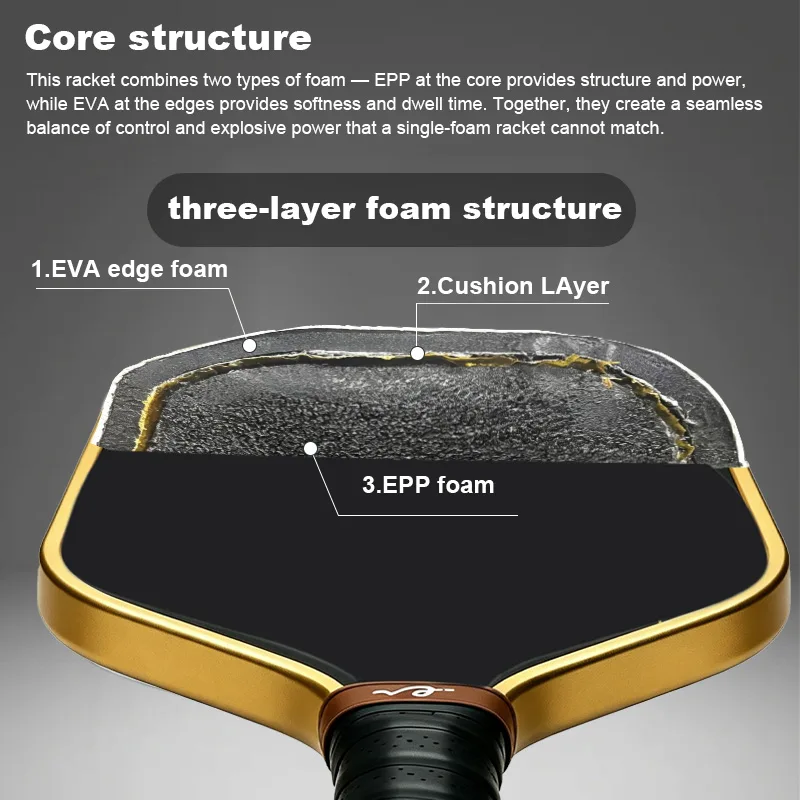
Core choice affects product story, sample feel, pricing, packaging tier, and how buyers explain power, control, pop, and forgiveness.
PP HoneycombEPP / MPP Foam Core
Review comparisonCompare
T300 vs T700 carbon paddles for private label planning.
T300 and T700 both support carbon paddle programs, but they should be positioned differently by price tier, buyer expectation, packaging, and sample approval.
T300 CarbonT700 Carbon
Review comparisonCompare
Widebody vs elongated paddles for B2B product planning.
Shape changes forgiveness, reach, swing feel, and the product story a buyer can tell. The right choice depends on player profile and channel.
WidebodyElongated
Review comparisonCompare
Widebody vs hybrid paddles for balanced B2B lines.
Widebody and hybrid shapes both work for broad audiences, but they tell different stories. The right choice depends on forgiveness, balance, and how much performance you want to show in the catalog.
WidebodyHybrid
Review comparisonCompare
Hybrid vs elongated paddles for balanced and performance lines.
Hybrid and elongated shapes both sit in the premium conversation, but they solve different problems. One gives a more balanced catalog fit, while the other leans into reach and a stronger performance story.
HybridElongated
Review comparison