Distributor catalog supply
Build a multi-tier paddle catalog with value sets, mid-market models, carbon fiber options, and stable carton packing for repeat orders.
Wholesale
ACE supports bulk pickleball paddle supply with model selection, custom logo options, private label packaging, pickleball paddle box packaging, samples, balls, bags, carton planning, and repeatable factory records for B2B buyers.
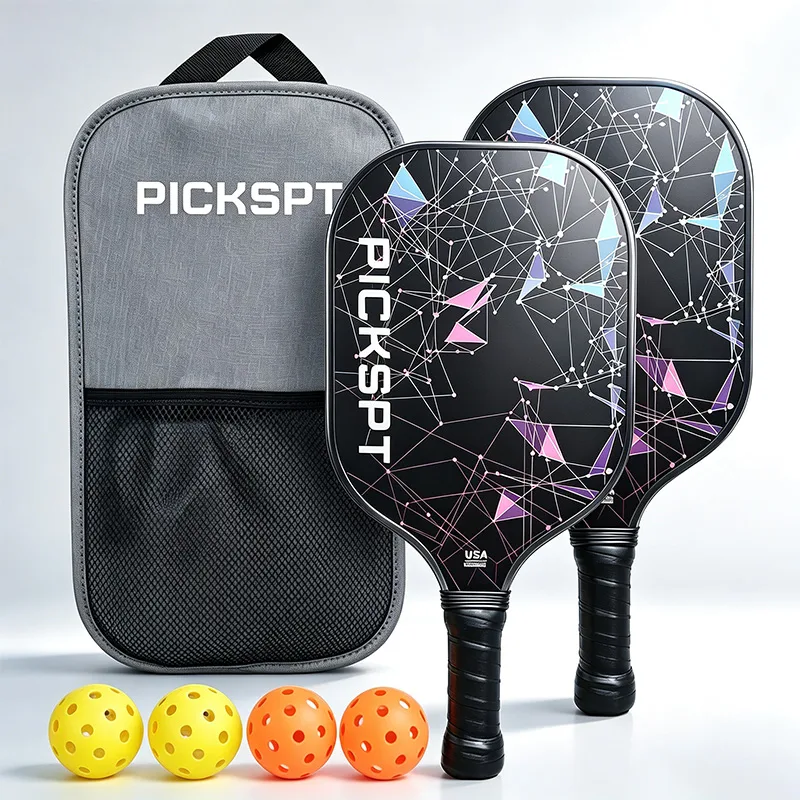
Buyer Types
Wholesale paddle sourcing should start with the selling channel, because a distributor catalog, Amazon launch, club pack, and promotional bundle need different specifications.
Build a multi-tier paddle catalog with value sets, mid-market models, carbon fiber options, and stable carton packing for repeat orders.
Prepare private label paddles with custom packaging, paddle boxes, barcode labels, listing-ready product groups, and sample records before bulk production.
Source durable bulk pickleball paddles, balls, and bags for lessons, leagues, camps, starter kits, and branded club merchandise.
Wholesale Details
These are the details that usually move a wholesale quote, sample plan, and packaging decision.
| Product range | Carbon fiber paddles, T300 and T700 paddle discussions, fiberglass paddles, hybrid paddles, wood beginner sets, club packs, balls, bags, and packaging accessories on request. |
|---|---|
| Wholesale use cases | Distributor catalog orders, sports retail lines, Amazon and marketplace launches, club training packs, school programs, event kits, and promotional paddle bundles. |
| Branding | Stock ACE-ready models, buyer logo, full-face graphics, grip band details, private label packaging, custom pickleball paddle boxes, barcode labels, carton marks, and listing-ready product combinations. |
| Sampling | Physical samples are recommended before bulk production to confirm play feel, artwork accuracy, grip, edge guard, surface finish, packaging, and carton packing. |
| Shipping support | Export carton packing, commercial invoice, packing list, and shipment coordination with buyer forwarder or agreed route. |
Supplier Checklist
A complete wholesale request helps ACE recommend the right model tier, MOQ path, sample plan, packaging level, and shipment route.
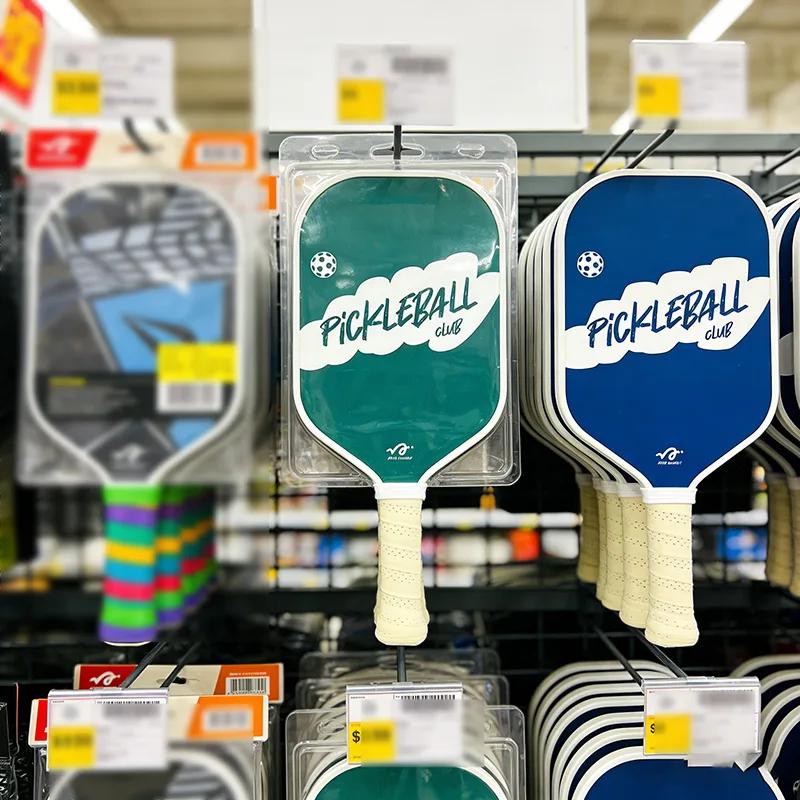
Wholesale Paddle Tiers
A clear tier structure helps buyers avoid a weak catalog where every paddle looks interchangeable.
Fiberglass, wood, and simple paddle sets for schools, clubs, promotional buyers, camps, and entry-level retail programs.
Custom logo paddles with packaging, inserts, barcode labels, ball bundles, and carton marks for online and retail sellers.
T300, T700, textured carbon, 14mm, 16mm, EPP, and MPP discussions for premium wholesale and brand-led paddle programs.
Internal Sourcing Path
These pages connect the wholesale keyword cluster with service, guide, product, and packaging intent.
The main page for custom printed pickleball paddles, custom logo paddles, private label packaging, samples, and bulk production.
A supporting service page for quote preparation, model tiers, distributor programs, and repeat wholesale order records.
Use this page when the main priority is quantity, cost control, packing, and final inspection.
Plan private label packaging, pickleball paddle box packaging, sleeves, inserts, barcodes, and carton marks.
A checklist for comparing supplier capability, MOQ, sample approval, packaging, and repeat order control.
Plan sample approval, MOQ, and launch timing around the actual build complexity.
Send a cleaner quote request with channel, quantity, build, packaging, and logistics details.
Carbon fiber and premium paddle references for higher-end wholesale and private label product lines.
Retail-ready paddle sets, balls, bags, sleeves, boxes, inserts, and carton planning.
Wholesale Pricing
Four variables move a bulk pickleball paddle quote, and only one of them is the paddle itself.
Quantity against MOQ. Every build has a minimum run, and the piece price falls as the order moves up through the tiers. The first break usually comes when a run stops being a setup job and starts amortising tooling, print plates and a full production day.
Build and material. A fiberglass paddle with a polymer honeycomb core sits at the entry of the range. A carbon fiber face — T300 or T700 — with a thermoformed or EPP/MPP core sits at the top. Between them, thickness choice (13mm, 14mm, 16mm) changes both the feel and the material cost per unit.
Branding method. A stock ACE model with a grip band or a small logo is the cheapest path. Full-face custom graphics printed onto the paddle face cost more because each design needs its own artwork setup and print run. A paddle that is only branded on the packaging is cheaper again.
Packaging level. Poly bag, printed sleeve, retail box with insert, gift box, or a retail-ready display carton are four different line items. A barcode label, a hang tab, a ball bundle and a carton mark each add a step rather than a material cost.
Ask for the quote broken down by these four lines rather than as a single piece price. It makes the comparison between two suppliers possible, and it shows which lever to pull when a target price has to be met without changing the product.
MOQ
MOQ is not one number per supplier. It is a number per build, and it is decided by the process, not by preference.
A stock paddle model with buyer branding on the grip or in a small area is the lowest-MOQ path, because the paddle body is already in production and only the branding step changes between orders.
A full-face custom graphic raises the MOQ, because the artwork has to be set up and the printed face is specific to that design. Ordering two designs rather than one usually means two setups and two minimum runs — which is why it is worth consolidating a launch into fewer designs at higher volume rather than spreading the same total quantity across five.
Custom packaging has its own minimum, separate from the paddle. A printed box, a custom insert or a branded sleeve each carry a tooling or plate cost that has to be spread over the packaging run. Where a buyer is launching, the usual sequence is a stock or semi-custom package for the first order and a fully custom pack once the design has proven itself.
Where an order falls below a minimum, the honest answer is often to change the build rather than to ask for an exception: fewer designs, a simpler print method, or a stock package with a printed label gets the order into a range the process can run economically.
Private Label Program
Six stages take a buyer from an idea to a repeatable product line, and each one answers a question the next stage depends on.
1. Line definition. Decide how many models the catalog needs, what each one is for — value, mid-market, performance — and which channel it serves. A line that is defined by price tier rather than by colour avoids the common problem of five paddles that compete with each other.
2. Specification. For each model, set the face material, the core and its thickness, the shape, the handle length and circumference, and the edge construction. These are the decisions that determine how the paddle plays, and changing one later usually means changing the tooling.
3. Artwork. Supply the design in a vector or high-resolution format, with the logo placement and any edge clearance marked. A full-face graphic needs to be prepared for the paddle's actual outline, including the rounded corners, rather than as a rectangle that gets cropped.
4. Sample. A physical sample is the only way to confirm play feel, print accuracy, grip, edge guard and surface texture together. Artwork that looks right on screen can print differently on a textured carbon face, so the sample is where that is caught.
5. Bulk production. Once the sample is approved, the run is scheduled against the agreed specification. Keeping the approved sample as the reference means the second order matches the first, which matters more than most buyers expect — a reorder that plays differently creates returns.
6. Reorder record. Specifications, artwork files, packaging dimensions and carton marks are kept together so a repeat order does not restart the process from the brief.
Packing & Export
Two requirements have to be met in the same carton: the product has to survive the journey, and it has to be ready to sell when it arrives.
At the retail level, the question is what the customer sees. A paddle in a poly bag is a low-cost entry that suits club packs and bulk supply. A printed sleeve or retail box suits marketplace listings, where the packaging is part of the product photograph. A box with an insert holds the paddle in place and protects the face in transit, which reduces the returns that come from a paddle arriving with a marked surface.
Barcodes, hang tabs and carton marks are specified per channel. A marketplace seller needs a scannable label on the retail unit; a distributor needs the outer carton marked so it can be received into a warehouse without opening it. Both are cheap to add when they are planned with the order and awkward to add afterwards.
At the transit level, paddles are light and stack badly, so export packing is about compression and corner protection rather than weight. The carton has to be sized to the packed paddle, not to the nearest stock box, because a loose carton lets the contents move and the edges take the damage. Carton quantity per outer is a buyer decision — smaller outers suit parcel networks, larger outers suit container and pallet shipments.
Where a shipment is going to a forwarder or a marketplace warehouse, send the labelling and carton-mark requirements with the order. It is the one part of a wholesale order that is easy to get right at the quotation stage and expensive to fix after production.
Timeline
A wholesale paddle order runs through five stages. The bulk production time is the shortest of them; the ones before it are what buyers underestimate.
Quotation. A complete request — quantity, tier, material direction, branding method, packaging level, destination and timeline — comes back as a quote rather than a question. Requests that leave out the channel or the packaging level usually need a second round.
Sample. The sample stage is where the build is confirmed. It is also the stage most often squeezed, and squeezing it is what produces a bulk order that does not match the brief.
Artwork approval. Once the sample is right, the artwork goes to the production file. Any change after this point moves the schedule, because the print setup has already been made.
Bulk production. The run is scheduled against the approved specification, with the approved sample held as the reference for the whole batch.
Packing and shipment. Retail packing, carton marks and the export documents are prepared alongside production so the goods can move as soon as the run finishes. Where the buyer's forwarder is collecting, the collection date is set before production ends rather than after.
The lesson across all five is the same: the calendar is set by the decisions, not by the factory. A buyer who arrives with the line, the artwork and the packaging decided compresses the front of the schedule; one who decides during production extends it at the back.
Common Mistakes
Five errors account for most of the friction in a bulk pickleball paddle order.
Comparing a single piece price. Two quotes at the same price rarely include the same thing. One may include retail packaging and a barcode; the other may be poly-bagged at carton level. Compare the scope, then the price.
Skipping the sample to save time. The sample is the cheapest stage of the order and the one that catches the expensive problems — print colour on a textured face, a grip that does not match the drawing, a shape that plays differently from the reference.
Spreading quantity across too many designs. Five designs at a fifth of the volume each cost more per unit than one design at the full volume, and they dilute the catalog. Launch narrow and widen on the reorder.
Leaving packaging until after production. Packaging is specified per channel and has its own minimum. Deciding it late means either a delay or a compromise on the retail presentation.
Not keeping the approved sample. The approved sample is the reference that makes the second order match the first. Buyers who keep it get consistent reorders; buyers who do not tend to rediscover the specification every time.
Wholesale FAQ
Yes. ACE supports distributor programs with beginner paddles, fiberglass paddles, carbon fiber paddles, private label options, paddle sets, balls, bags, retail packaging, and repeat order records.
Send target quantity, destination country, sales channel, preferred paddle type, logo or artwork needs, packaging level, sample requirement, and expected delivery window.
Yes. ACE can discuss logo printing, full-face graphics, grip band details, custom pickleball paddle packaging, sleeves, gift boxes, inserts, barcode labels, carton marks, and bundle packaging.
Yes. Include paddle box packaging, private label packaging, inserts, barcodes, bag or ball bundles, and carton label needs in the wholesale RFQ so the quote reflects the complete retail-ready order.
Most wholesale buyers compare three tiers: value fiberglass or beginner sets, mid-market composite paddles, and carbon fiber performance paddles for premium retail or club programs.